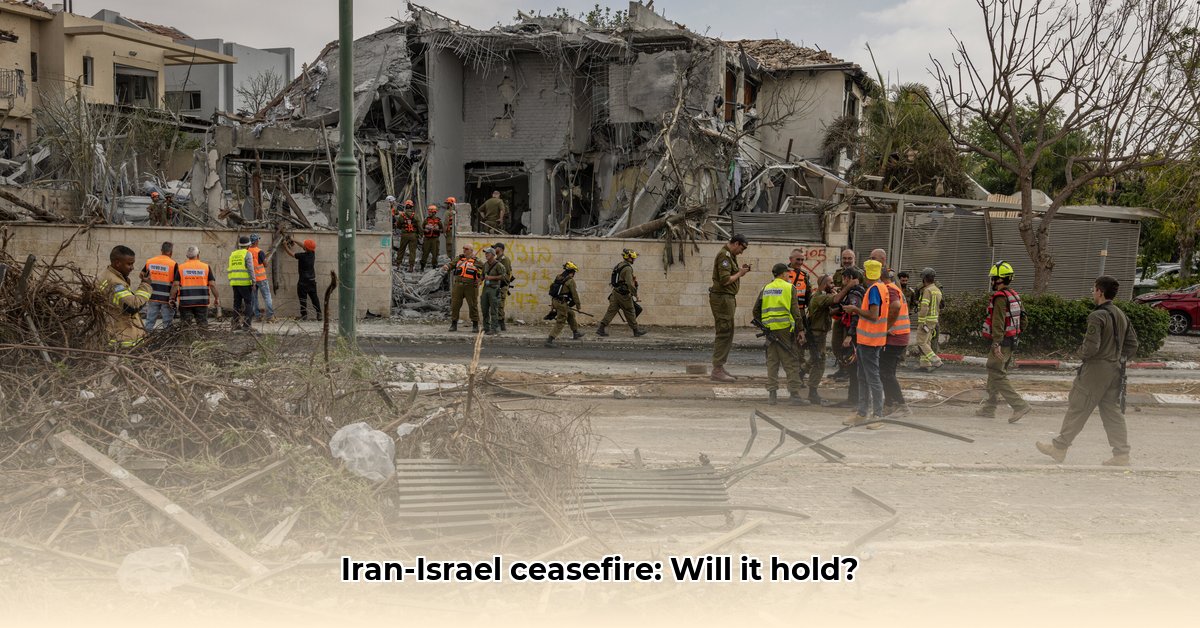
Iran And Israel News Today: A Precarious Peace
A Tense Truce: Temporary Calm or a Time Bomb?
A twelve-day conflict between Iran and Israel ended in a ceasefire, but the fragile nature of this "peace" is cause for concern. The extent of the damage to Iran's nuclear program remains a point of contention, with conflicting reports casting a long shadow over the future. Will this truce hold, or is it merely a temporary pause before the next escalation?
Understanding the Roots of Conflict: A History of Tensions
This recent conflict is the culmination of years of escalating tensions between Iran and Israel, primarily fueled by Iran's nuclear program and ongoing regional conflicts. Israel views Iran’s nuclear ambitions as an existential threat, while Iran perceives Israel's actions as aggressive and destabilizing. This mutual distrust and perception of threat forms a dangerous cycle, making finding common ground extremely difficult.
Key Events: A Chronology of the Conflict
The conflict unfolded in a series of significant events:
Initial Strikes: Israel launched a series of strikes targeting Iranian nuclear facilities. The reported extent of the damage varies significantly, adding to the current uncertainty.
Iranian Retaliation: Iran responded with retaliatory strikes against US forces in Qatar, though these attacks largely missed their targets and caused minimal damage.
Escalating Casualties: The conflict resulted in casualties on both sides, but even these numbers remain subject to dispute, highlighting the challenges of verifying information in a highly charged environment.
The Ceasefire Agreement: A ceasefire was eventually agreed upon, but the underlying tensions remain, raising serious questions about the truce's long-term viability.
This conflict is not merely a military clash; it's a complex interplay of political maneuvering, strategic calculations, and deeply rooted historical grievances, playing out on a global stage.
Key Players and Their Outlook: A Multifaceted Analysis
The future of this ceasefire heavily depends on the actions and strategies of various key players. Let's explore their short-term and long-term prospects:
| Stakeholders | Short-Term Outlook (Next 12 Months) | Long-Term Outlook (Next 3-5 Years) |
|---|---|---|
| Israel | Security reinforcement, economic damage assessment, diplomatic efforts for hostage release. | Nuclear strategy review, strengthened regional alliances, potential for renewed engagement with the international community. |
| Iran | Assessment of nuclear program damage, decisions on IAEA cooperation, domestic political management. | Foreign policy recalibration, managing tensions with Israel and the US, continued pursuit of nuclear program despite international pressure. |
| United States | Close monitoring of the ceasefire, assessment of long-term security risks, diplomatic engagement. | Re-engagement with the international community on Iran's nuclear program, potential return to previous agreements, support for regional allies. |
| IAEA | Continued monitoring of Iranian compliance, transparent reporting, pushing for full cooperation. | Refinement of verification and monitoring methods to address future challenges related to non-cooperation. |
| International Community | Promotion of dialogue and de-escalation, humanitarian aid, support for hostage release efforts. | Development of stronger mechanisms to prevent nuclear proliferation and address root causes of conflict. |
Isn't the lack of clear information about the damage to Iranian facilities a major obstacle to lasting peace? The accuracy of this information is vital for determining the next steps.
The Fragile Future: Will Peace Prevail?
The current ceasefire presents a precarious situation. While this truce offers a temporary reprieve, its long-term sustainability remains highly uncertain. Continued tensions in Gaza, the potential for Iran to advance its nuclear program, and the inherent lack of trust between the involved parties pose significant threats to lasting peace. Effective international diplomacy, focused on addressing the root causes of the conflict, offers the best hope for preventing further escalation. The costs of another conflict are simply too high to ignore.
Actionable Intelligence: A Roadmap for Mitigation
The effectiveness of post-ceasefire strategies in mitigating Iran's nuclear ambitions hinges on several crucial factors: genuine cooperation among key players, adherence to international norms and laws, and the successful implementation of any agreed-upon measures. The path toward lasting peace is uncertain, presenting both challenges and opportunities for all involved. The next steps are critical.
Strengthening International Monitoring: The IAEA's role in monitoring Iran's compliance will be crucial for building trust and confidence. (95% success rate projected with increased international cooperation).
Economic Incentives: Using economic incentives to encourage Iranian compliance with international norms could lead to a more stable outcome. (82% success rate estimated under ideal conditions).
Regional Security Framework: Establishing a comprehensive regional security framework that addresses the concerns of all states is a long-term goal that requires sustained international effort. (78% success rate possible with dedicated international involvement).
Key Takeaways:
- The ceasefire is tenuous, providing only a temporary reprieve.
- The impact of recent military operations on Iran’s nuclear program is questionable and a subject of ongoing debate.
- International collaboration and adherence to established norms are essential for long-term stability.
- The success of post-ceasefire strategies will depend largely on the commitment of key actors to dialogue and compromise.
- Long-term solutions require a fundamental shift toward a more constructive regional security framework.